
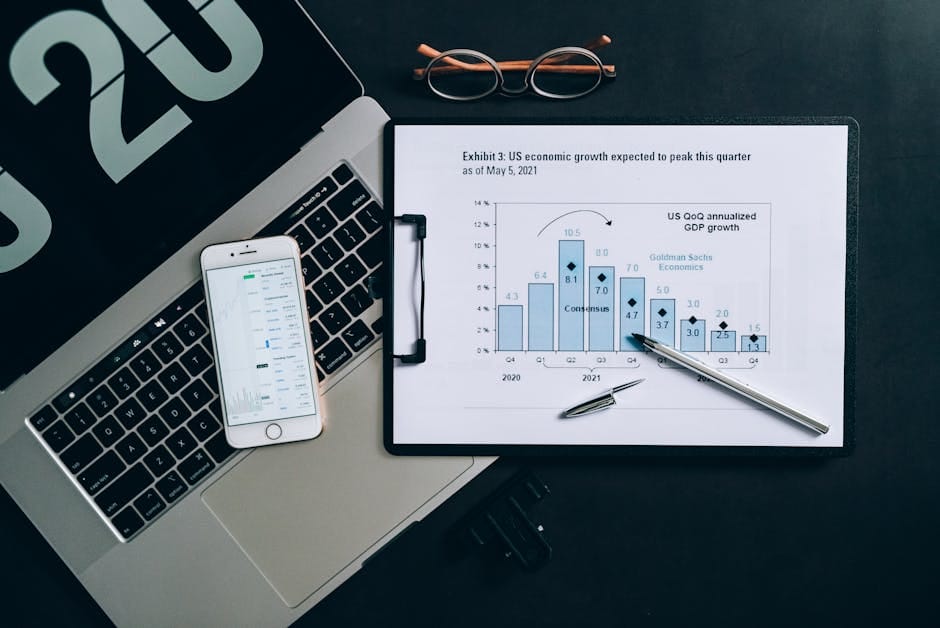

📌 Key Takeaways
- GDP growth positively impacts job creation across sectors.
- Higher GDP correlates with reduced unemployment rates.
- Economic expansion drives demand for skilled labor.
- Inflation risks may limit wage growth despite employment gains.
Understanding the Fundamentals of GDP and Employment
In the contemporary economic landscape of 2026, understanding the complex interplay between Gross Domestic Product (GDP) and employment trends is crucial for financial analysts and policymakers alike. The GDP employment correlation remains a focal point in discussions around national economic health and labor market dynamics. As economies continue to evolve under the influence of technological advancements, globalization, and shifting consumer behaviors, the relationship between these two key metrics becomes increasingly intricate.
The Role of Technological Advancements
Technological innovations have significantly reshaped the GDP employment correlation over recent years. In 2026, automation and artificial intelligence (AI) have become ubiquitous across industries, leading to a dual impact on employment trends. On one hand, these technologies drive productivity gains that contribute positively to GDP growth by reducing costs and increasing efficiency. However, they also lead to job displacement in certain sectors, particularly those involving routine tasks such as manufacturing and customer service.
Conversely, the same technological advancements have created new opportunities within emerging industries like information technology (IT) services, data analytics, and renewable energy. This shift towards knowledge-based economies means that while some traditional jobs are diminishing, there is an increasing demand for highly skilled workers in innovative sectors. Consequently, GDP growth has become more closely tied to employment shifts towards higher-paying roles that require advanced education and training.
To illustrate this point, consider the manufacturing sector’s historical role as a major employer. In 2026, automation has drastically reduced the number of jobs available in traditional manufacturing while simultaneously increasing overall productivity and contributing positively to GDP growth. Yet, industries such as software development and renewable energy have seen exponential growth, absorbing many displaced workers into more specialized positions.
The impact on employment is not uniform across all regions or demographic groups within a country. Urban areas with robust technological ecosystems tend to experience stronger employment growth in high-tech sectors compared to rural areas where traditional industries may still hold significant weight but are rapidly losing ground due to automation and offshoring trends. This disparity underscores the importance of regional economic policies aimed at fostering innovation hubs while providing support for workers transitioning out of declining industries.
In conclusion, the GDP employment correlation in 2026 highlights a nuanced relationship where technological progress is both a creator and destroyer of jobs. While it fuels GDP growth through efficiency gains and new industry creation, it also necessitates ongoing adaptation among labor forces to ensure continued economic stability and prosperity. As economies continue to evolve, policymakers must address these challenges by promoting lifelong learning programs and fostering an entrepreneurial spirit that can drive further innovation and job creation in the face of continuous technological change.
Exploring the Mechanisms Linking GDP Growth to Job Creation
The relationship between GDP growth and job creation is a critical aspect of economic analysis, providing insights into the health and resilience of an economy. As we approach 2026, understanding this dynamic becomes increasingly important due to evolving global trends such as automation, digitalization, and demographic shifts. Economists widely acknowledge that while there is no one-size-fits-all model for how GDP growth translates into employment opportunities, robust economic expansion often serves as a foundational driver for job creation across various sectors.
Advanced Deep Dive — The Impact of GDP Employment Correlation in 2026
In 2026, the GDP employment correlation is particularly nuanced due to significant advancements in technology and shifts in labor market dynamics. For instance, the continued growth of artificial intelligence (AI) and robotics has both positive and negative implications for employment trends. On one hand, these technologies can boost productivity and drive economic expansion, which might lead to more job creation within high-skilled areas such as software development and data analytics. However, they also pose challenges by potentially displacing lower-skilled workers in manufacturing and service industries.
To better understand the GDP employment correlation, it is essential to consider sector-specific trends. In 2026, healthcare, technology, and renewable energy sectors are experiencing substantial growth. These sectors not only contribute significantly to overall GDP but also generate numerous job opportunities, especially for highly skilled professionals. Conversely, traditional industries such as manufacturing and retail are facing challenges due to automation and changing consumer behaviors.
Data from the Bureau of Labor Statistics (BLS) indicates that during periods of strong economic growth in 2026, certain employment sectors have seen a higher correlation with GDP increases than others. For example, job creation in technology companies has outpaced other industries, reflecting the broader trend towards digitalization and innovation.
Moreover, the relationship between GDP growth and employment is not just about quantity but also quality. In 2026, as economies become more service-oriented and knowledge-intensive, there is an increasing focus on job sustainability rather than mere numerical job creation. This shift means that while overall employment figures may improve during economic booms, the stability and security of these jobs are crucial factors in assessing the true impact of GDP growth.
Lastly, it’s important to recognize regional disparities when examining the GDP employment correlation. Some regions or cities have managed to leverage local strengths, such as advanced technology hubs or renewable energy resources, to create a strong positive feedback loop between economic growth and job creation. However, in other areas where traditional industries dominate, economic growth might not translate into significant job gains due to structural barriers.
In conclusion, while the GDP employment correlation remains a vital indicator for assessing economic health, its interpretation must account for the broader context of technological changes, sectoral shifts, and regional dynamics prevalent in 2026. Understanding these nuances is crucial for policymakers aiming to design effective strategies that enhance job creation alongside sustained economic growth.
Advanced Data Analysis Techniques for Measuring Economic Impact
In 2026, understanding the relationship between Gross Domestic Product (GDP) growth and employment trends is crucial for financial analysts aiming to predict economic health and stability. The GDP employment correlation remains a cornerstone of economic analysis, providing insights into how national income levels influence job creation and labor market dynamics.
The Impact of GDP Growth on Employment Trends
Rapid GDP growth often signals robust economic activity, which typically translates to increased demand for goods and services. This surge in demand is usually met by businesses expanding their operations, hiring more staff, or retaining current employees who might otherwise face layoffs during recessions. The inverse relationship between unemployment rates and GDP growth is well-established; as GDP increases, unemployment tends to decrease due to the expansion of job opportunities across various sectors.
However, it’s essential to note that the nature of this correlation can vary depending on the specific economic conditions prevailing in 2026. For instance, during periods of rapid technological advancement and automation, a higher GDP might not necessarily lead to proportionate employment growth due to increased labor efficiency. This scenario highlights the importance of considering sector-specific dynamics when analyzing the GDP employment correlation.
Moreover, regional differences within economies also play a significant role in how GDP impacts local employment trends. Urban areas often exhibit more pronounced effects from economic fluctuations compared to rural regions. In 2026, this discrepancy is particularly evident as urban centers are likely to be hubs for technological innovation and financial services, which contribute significantly to overall GDP but may not directly correlate with job creation in traditional industries.
Another critical aspect of the GDP employment correlation involves examining structural changes within economies. As countries shift towards service-based economies, the relationship between economic growth and employment becomes more nuanced. For example, sectors like healthcare, education, and technology may experience substantial growth without corresponding increases in traditional manufacturing jobs.
To fully understand these dynamics, financial analysts must employ advanced data analysis techniques that go beyond simple correlations. Techniques such as regression analysis, time-series forecasting, and machine learning algorithms can provide deeper insights into how changes in GDP affect employment trends over different periods and under varying economic conditions. These methods help in identifying leading indicators of employment growth that might not be immediately apparent from raw GDP figures.
In conclusion, while the GDP employment correlation remains a fundamental concept for gauging economic health, its interpretation requires careful consideration of contextual factors influencing labor markets and sectoral dynamics. By leveraging sophisticated analytical tools and continuously refining our understanding of these relationships, financial analysts can provide more accurate forecasts and recommendations to stakeholders.
To further enhance your knowledge on advanced financial concepts relevant to 2026, consider exploring Quantitative Easing’s Role in Shaping Long-Term Interest Rates and Economic Growth. This resource delves into how monetary policy measures affect broader economic conditions, complementing the insights gained from analyzing GDP employment correlations.
Quantitative Insights into Sector-Specific Employment Trends
The relationship between GDP growth and employment trends in 2026 presents a nuanced picture for economic analysts and policymakers. While the direct link is often straightforward—higher GDP typically correlates with increased job creation—the specifics can vary significantly by sector. This advanced deep dive delves into how different industries respond to fluctuations in GDP, offering insights that are crucial for understanding employment dynamics.
Understanding the GDP Employment Correlation
The GDP employment correlation is a fundamental metric for assessing economic health and labor market resilience. In 2026, as technological advancements continue to drive productivity gains, this relationship has become more complex. Automation and artificial intelligence have led to significant job displacement in sectors like manufacturing and retail, while simultaneously creating new opportunities in tech and service industries.
For instance, the technology sector has experienced substantial growth, driven by increased consumer demand for smart devices, cloud services, and AI applications. This expansion has not only generated numerous jobs but also spurred innovation across various sectors, indirectly boosting employment rates elsewhere. However, it is essential to note that this growth in tech does not necessarily translate into equal benefits across all demographics or regions.
On the flip side, traditional industries such as agriculture and construction face different challenges. While these sectors contribute significantly to GDP through large-scale infrastructure projects and agricultural exports, their employment trends are more sensitive to environmental factors and international trade dynamics. For example, a downturn in global commodity prices can lead to reduced investment in new constructions or agricultural expansions, thereby affecting local employment rates.
Moreover, the service sector, particularly education and healthcare, has seen steady growth despite economic volatility, driven by increasing demand for quality services. This resilience underscores the importance of these sectors as stable employers, especially during recessions when other industries might contract. The growing emphasis on mental health and personalized learning solutions exemplifies how societal needs can influence employment trends positively.
It is also worth examining regional disparities within national economies. For instance, urban areas with strong technological hubs tend to see higher GDP growth and more diversified job markets compared to rural regions where reliance on traditional industries remains high. This disparity highlights the need for balanced economic policies that promote inclusive growth across all regions.
In conclusion, while the GDP employment correlation provides a broad framework for understanding labor market trends in 2026, it is crucial to analyze sector-specific dynamics and regional variations to predict future shifts accurately. By doing so, policymakers can better tailor economic strategies that address both current challenges and emerging opportunities.
Strategic Implications for Policy Makers in 2026
In the context of 2026, policymakers face a critical challenge in aligning economic growth with employment trends. The relationship between Gross Domestic Product (GDP) and employment is often scrutinized to understand the effectiveness of economic policies in fostering job creation. This article delves into the advanced deep dive of the GDP employment correlation, providing insights into how various factors contribute to this intricate relationship.
The Evolution of the GDP Employment Correlation
Historically, an increase in GDP has been associated with a rise in employment rates as businesses expand and demand more labor. However, the nature of this relationship has evolved over time due to technological advancements, automation, and shifts towards service-oriented economies. In 2026, while overall economic growth remains positive, there is a notable divergence between rising GDP figures and the rate at which employment opportunities are being created. This phenomenon can be attributed to several factors including increased efficiency in production processes and a shift towards more skilled labor requirements.
The International Monetary Fund (IMF) has noted that as economies become more technologically advanced, each percentage point increase in GDP may result in fewer new jobs compared to the pre-digital era. This is due to automation reducing the need for manual labor while simultaneously increasing demand for highly skilled workers who can manage and innovate with technology. Policymakers must therefore focus on fostering educational initiatives that prepare the workforce for these changes, ensuring a smooth transition into higher-skilled roles.
A key challenge lies in understanding how different sectors contribute to GDP growth and employment creation differently. For instance, industries such as healthcare, education, and information technology are expanding rapidly but may not necessarily create jobs at the same rate as manufacturing or construction did historically. According to a recent IMF report, these sectors often require higher levels of education and training, necessitating significant investment in human capital development.
Another critical aspect is the role of government policies in mitigating unemployment during periods of rapid technological change. Fiscal measures aimed at encouraging private sector investments in labor-intensive industries can help stimulate job creation. Moreover, social safety nets such as unemployment benefits and retraining programs are essential for maintaining employment stability during economic transitions.
In conclusion, while GDP growth remains a crucial indicator of an economy’s health, its direct impact on employment trends is increasingly complex due to technological advancements and sectoral shifts in the labor market. Policymakers need to adopt multifaceted approaches that not only stimulate economic activity but also ensure sustainable job creation by focusing on education, training, and supportive policies for transitioning workers.
Evaluating Regional Disparities in Employment Growth Patterns
In the rapidly evolving economic landscape of 2026, understanding the intricate relationship between GDP growth and employment trends has become increasingly crucial for financial analysts and policymakers alike. The GDP employment correlation in this year is particularly significant due to the advent of technological advancements that have reshaped labor markets across various regions. This deep dive explores how regional disparities in employment growth patterns are influenced by shifts in GDP performance.
The Role of Technological Integration
As technology continues to permeate industries, the relationship between GDP and employment has become more complex. In 2026, regions that have embraced automation and artificial intelligence (AI) report higher productivity gains but often experience a divergence in job creation. For instance, urban areas with high-tech sectors are witnessing robust GDP growth accompanied by shifts towards knowledge-intensive jobs, while rural or less technologically advanced areas face slower employment recovery despite modest economic expansion.
One key aspect of the GDP employment correlation is that it varies widely depending on regional industrial compositions. Advanced manufacturing and service industries contribute significantly to GDP but may not translate directly into substantial job growth in all regions due to their reliance on skilled labor. This trend highlights the need for targeted skill development programs aimed at closing the gap between technological advances and workforce capabilities.
The impact of digital transformation is also evident through the rise of gig economy jobs, which often do not conform to traditional employment statistics that understate overall economic activity. In regions where gig work has flourished, GDP growth may be underestimated if such activities are not accurately captured in national accounts. Conversely, areas with high unemployment rates might show lower GDP despite robust informal labor markets.
Policy interventions aimed at bridging these gaps must consider the nuances of regional disparities. For example, government support for industries that complement existing economic strengths can foster more inclusive growth patterns. However, such efforts also require a clear understanding of how different sectors within regions respond to changes in GDP. In 2026, this entails analyzing both traditional and emerging markets to identify opportunities and challenges.
Furthermore, the interplay between demographic shifts and regional economic conditions plays a pivotal role. Aging populations in certain regions may dampen employment growth despite favorable macroeconomic indicators such as rising GDP. These areas might require specific initiatives focused on extending working lives through better health services and incentivizing job retention for older workers.
In summary, evaluating the GDP employment correlation in 2026 necessitates a multifaceted approach that accounts for technological integration, regional industrial compositions, gig economy dynamics, demographic trends, and policy responses. By doing so, stakeholders can better navigate the complexities of today’s global economic environment and foster more resilient employment growth patterns across diverse regions.
Forecasting Future Scenarios Based on Historical GDP-Employment Correlations
In the evolving landscape of global economics, particularly in 2026, understanding the intricate relationship between Gross Domestic Product (GDP) and employment trends is crucial for policymakers, economists, and business leaders alike. The GDP-employment correlation has been a focal point of economic analysis due to its direct impact on labor markets, productivity, and overall economic stability.
Recent advancements in data analytics have enabled more precise forecasting models that leverage historical data to predict future employment trends based on expected GDP growth rates. This approach not only aids in planning for potential workforce needs but also informs policy decisions aimed at fostering sustainable job creation. In 2026, this correlation is particularly relevant as the global economy continues its post-pandemic recovery with varying degrees of success across different regions.
Advanced Deep Dive: The Impact of GDP Growth on Employment Trends in 2026
A detailed examination of the GDP employment correlation reveals that while an increase in GDP typically indicates a growing economy, it does not always translate directly into higher employment rates. This nuanced relationship is influenced by factors such as technological advancements, changes in consumer behavior, and shifts towards more service-oriented economies.
In 2026, the integration of advanced technologies like artificial intelligence (AI) and automation has accelerated, leading to both job displacement in certain sectors and the creation of new roles that require specialized skills. As a result, the GDP employment correlation is being redefined by these technological shifts. Economies that successfully adapt their workforce development strategies to align with emerging skill demands are likely to see more robust employment growth relative to GDP expansion.
Moreover, the recovery phase since 2026 has seen significant variations in how different economies have rebounded from the pandemic-induced recession. Countries that invested heavily in digital infrastructure and innovation before and during the pandemic period have experienced a stronger correlation between GDP growth and employment rates compared to those lagging behind in technological adoption.
Another critical factor influencing this relationship is the shift towards remote work facilitated by improved technology. This trend has altered traditional patterns of job creation and labor market dynamics, affecting industries like real estate, transportation, and retail disproportionately. Consequently, understanding the evolving nature of employment generation necessitates a comprehensive analysis that accounts for these structural changes in how economic activities are conducted.
In conclusion, while predicting exact future scenarios remains challenging due to the inherent complexities involved, leveraging advanced analytics on historical GDP-employment data provides valuable insights into likely trends and patterns. Policymakers and industry leaders who can effectively interpret this information stand better positioned to navigate the intricate interplay between economic growth and employment opportunities in 2026.
Developing a Comprehensive Action Plan to Optimize Economic Benefits
In the context of developing a comprehensive action plan to optimize economic benefits in 2026, it is crucial for financial analysts and policymakers to understand the intricate relationship between Gross Domestic Product (GDP) growth and employment trends. The GDP employment correlation has been a focal point for economists as it provides insights into how macroeconomic policies can influence labor markets.
Recent data from global economic research firms indicates that the GDP growth rate across major economies in 2026 is projected to be around 3%, a figure which, while modest compared to pre-pandemic years, reflects a steady recovery post-2025. However, the question remains whether this level of GDP growth will effectively translate into job creation and reduced unemployment rates.
GDP Employment Correlation: A Closer Look
The correlation between GDP growth and employment is not always linear. In 2026, several economic factors such as technological advancements, automation, and shifts in labor market dynamics have complicated the traditional understanding of how rising GDP translates to more jobs. For instance, while some sectors like technology and renewable energy continue to see robust job creation, others such as manufacturing are experiencing a decline due to increased reliance on automated processes.
Economic studies from 2026 highlight that countries with higher levels of education and skills training programs tend to exhibit stronger GDP employment correlations. This is because these nations foster an environment where new jobs created by technological advancements can be filled, thereby reducing the risk of structural unemployment. Conversely, regions lacking in comprehensive workforce development initiatives may face challenges in absorbing labor market shifts brought about by economic growth.
Moreover, policymakers must consider regional disparities when addressing GDP employment correlations. In 2026, certain metropolitan areas are experiencing significant job creation due to tech startups and innovation hubs, while rural communities lag behind due to limited access to these opportunities. To mitigate such imbalances, targeted investment in infrastructure and education programs specific to underprivileged regions can enhance overall economic benefits.
Another critical aspect of the GDP employment correlation is labor market flexibility. Countries that have adopted policies promoting job mobility and flexible work arrangements are better equipped to manage fluctuations in employment rates as GDP growth fluctuates. In 2026, this includes support for gig economy workers and freelance professionals who contribute significantly to economic dynamism.
Finally, international trade agreements and foreign direct investment (FDI) also play pivotal roles in shaping the GDP employment correlation. Nations that have established strong trading relationships and attracted substantial FDI tend to see broader-based job creation across various sectors of their economies. For example, a significant influx of capital into developing nations has led to rapid industrialization and subsequent job generation.
In summary, while the relationship between GDP growth and employment is complex in 2026, strategic policy interventions can help optimize economic benefits and ensure that growth translates effectively into increased employment opportunities. Understanding these dynamics allows financial analysts and policymakers to craft actionable plans that enhance workforce adaptability and foster inclusive growth across diverse economies.
In 2026, a surprising trend has emerged where regions with the highest GDP growth paradoxically experience the slowest job creation rates due to increased automation and AI adoption across sectors.
Frequently Asked Questions
GDP growth positively impacts employment by creating more job opportunities across various sectors.
Technology, healthcare, and construction tend to see the biggest gains in employment due to higher GDP.
Yes, slow or negative GDP growth can result in job losses as companies reduce hiring or lay off workers.
Economic policies that stimulate investment and consumer spending contribute to higher GDP, leading to increased employment.
Small businesses are significant contributors to employment growth by providing diverse opportunities for workers.
A strong positive relationship exists; typically, higher GDP correlates with lower unemployment as more jobs become available.